
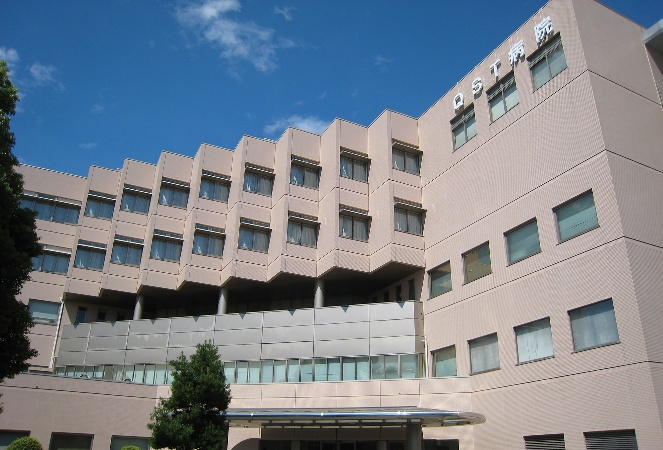

QST Hospital
The National Institute of Radiological Sciences, the predecessor of QST, was established in 1957. It is a research hospital based on radiological science, specializing in diagnostic imaging and radiation therapy for cancer, nuclear medicine, and emergency radiation medicine. The hospital provides heavy-ion cancer therapy and is one of the world’s most experienced medical institutions in this field.
Contact Information
QST Hospital
The National Institute of Radiological Sciences, the predecessor of QST, was established in 1957. Its hospital is a research-oriented medical institution founded on radiological science, with a focus on diagnostic imaging, radiation therapy for cancer, nuclear medicine, and emergency radiation medicine.
The hospital provides heavy-ion cancer treatment, particularly carbon-ion radiotherapy, and has significant strengths in both its clinical application and related research. It is regarded as one of the world’s most experienced medical institutions in this field.
Many of the hospital’s research achievements have laid the foundations of heavy-ion medicine and placed it at the forefront of the field internationally. It also develops comprehensive treatment plans for patients who do not currently meet the standard indications for heavy-ion radiotherapy and actively works to expand the range of conditions eligible for this treatment.

The hospital has conducted radiological research for many years, with a particular emphasis on cancer treatment using heavy-ion beams. Based on the principle of advancing research while providing treatment, it is committed to delivering high-quality medical care and expanding public health insurance coverage to include a broader range of cancers.
Both inpatient and outpatient care are available. Through individually tailored treatment plans, the hospital aims to help patients recover and return to society as soon as possible while maintaining a good quality of life, or QOL.
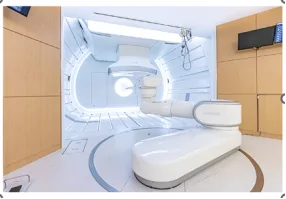
In 2011, a new treatment facility dedicated to heavy-ion cancer therapy was completed. It is equipped with a 360-degree rotating gantry, which allows tumors to be irradiated from a wide range of angles and further reduces the physical burden on patients.
The hospital also uses PET-CT, CT, and MRI for examinations and diagnostic imaging. These systems are used for initial diagnosis, assessment of treatment eligibility, and follow-up evaluation after treatment.
The carbon ions used in heavy-ion radiotherapy are approximately 12 times heavier than protons. Their unique physical and biological characteristics make them particularly suitable for cancer treatment in terms of both precise dose concentration and biological effectiveness.
Compared with conventional X-ray radiotherapy, heavy-ion radiotherapy can position the high-dose region inside the body, known as the Bragg peak, more precisely within the cancerous lesion. This allows a concentrated dose to be delivered to the tumor while reducing damage to surrounding healthy tissue.
At its peak, the biological effectiveness of heavy-ion radiation—its ability to kill cancer cells—is approximately two to three times greater than that of X-rays or proton beams. This makes it effective against cancers that are resistant to conventional X-ray radiotherapy.
The biological effect of heavy-ion radiation is relatively low near the surface of the body and gradually increases as the beam penetrates deeper, reaching its maximum at the peak. By matching this peak to the location and size of the lesion, a higher physical and biological dose can be delivered to the tumor than to the surrounding normal tissue.