


Proton Therapy Center, University of Tsukuba Hospital
At the Proton Beam Therapy Center of the University of Tsukuba Hospital, three specialized medical teams—physicians, medical physicists, and radiological technologists—work closely with specialist nurses to provide each patient with the treatment approach best suited to their individual needs.
Contact Information
Proton Therapy Center, University of Tsukuba Hospital
University of Tsukuba Hospital
University of Tsukuba Hospital was established in 1976. Its mission is to contribute to the advancement of healthcare by providing high-quality medical services and cultivating outstanding medical professionals.
As the only hospital in Ibaraki Prefecture designated as an Advanced Emergency and Critical Care Center, a Disaster Base Hospital, and a Comprehensive Stroke and Cardiovascular Disease Support Center, the hospital plays an important role in strengthening the prefecture’s wide-area healthcare system and regional medical collaboration network.
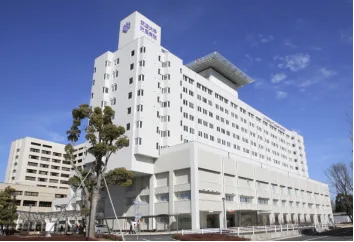
As the affiliated hospital of the University of Tsukuba, one of Japan’s designated national universities, the hospital will continue to strengthen and expand specified clinical research, industry–government–academia collaborative research, advanced medical education, highly specialized medical care, and international cooperation projects.
The hospital brings together motivated and forward-looking healthcare professionals who place patients first. It is committed to creating a compassionate medical environment and providing patient-centered care.
Proton beam therapy was introduced in 1983, and the Proton Beam Therapy Center currently treats more than 400 cases each year.
Compared with conventional X-ray radiotherapy, proton beam therapy can deliver radiation more precisely to the affected area while reducing the dose received by surrounding healthy tissues. This helps lower the risk of radiation-related side effects and complications.
Proton beam therapy has achieved significant results in the treatment of difficult-to-treat tumors affecting areas such as the liver, esophagus, lungs, and brain.
As the only designated Special Functioning Hospital in Ibaraki Prefecture, its radiation oncology department is connected through a medical network with designated cancer care hospitals throughout the prefecture and works closely with the radiation oncology departments of other medical institutions.
In cooperation with referring physicians and specialist departments, the hospital strives to provide the most appropriate treatment plan for each cancer patient.
Boron neutron capture therapy, or BNCT, is expected to become a new treatment option for highly aggressive and difficult-to-treat tumors, particularly in cases where conventional radiotherapy is unlikely to be effective.
The University of Tsukuba is currently conducting physician-led clinical trials using independently developed treatment equipment for glioblastoma and other brain tumors, with the aim of bringing this technology into clinical use as soon as possible.