


National Cancer Center Hospital East
Since its establishment in 1992, the National Cancer Center Hospital East has developed a range of advanced medical facilities to provide the highest standard of cutting-edge care. These include Japan’s first palliative care facility at a national hospital, one of the country’s largest endoscopic treatment centers, and Japan’s first proton beam therapy facility.
Contact Information
National Cancer Center Hospital East
The National Cancer Center Hospital East is a specialized cancer treatment institution established in Kashiwa, Chiba Prefecture, in 1992. Our mission is to provide each patient with the most appropriate and up-to-date cancer care. We continue to advance cancer treatment through state-of-the-art medical technologies and extensive clinical expertise.
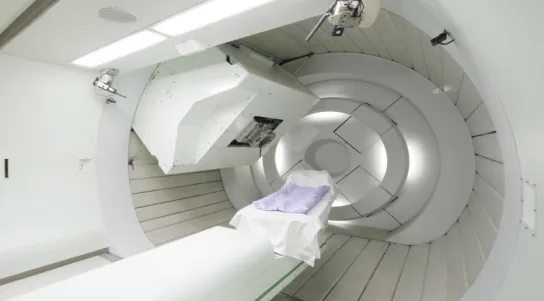
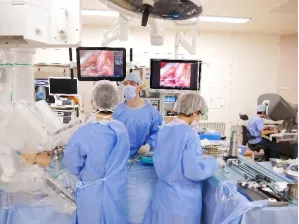
The hospital is equipped with advanced medical systems, including robotic surgery and proton beam therapy facilities. We provide endoscopic treatments and minimally invasive surgical procedures designed to reduce the physical burden on patients, as well as drug therapies and a wide variety of clinical trials.
Our hospital was the first in Japan to introduce a hospital-based proton beam therapy facility and the second medical institution in the world to begin its clinical application. Proton beam therapy is used to treat a broad range of conditions, from childhood cancers to lung cancer. Over approximately 20 years since the treatment program began, we have treated more than 4,000 cases. By utilizing the latest technologies, we are committed to providing patients with high-quality care.
With a large number of cases, extensive treatment experience and a strong clinical record, the hospital attracts patients from across Japan and overseas. Approximately 300,000 cancer patient visits are recorded each year, including both domestic and international patients. To improve convenience for patients visiting the hospital, an accommodation facility affiliated with the hospital was opened on the hospital grounds on July 1, 2022.
A proton beam is a form of ionizing radiation produced by accelerating protons—the nuclei of hydrogen atoms—to nearly the speed of light using a synchrotron. Proton beam therapy delivers radiation directly to a cancerous lesion while minimizing its effects on surrounding healthy tissue. The radiation damages and destroys cancer cells, and patients generally do not experience heat, pain or other discomfort during treatment.
Proton beams have a unique physical property known as the “Bragg peak,” through which they release their maximum energy at a specific depth inside the body. This makes it possible to concentrate radiation on the tumor while limiting exposure to nearby healthy tissue. Proton beam therapy therefore offers an advanced treatment option aimed at achieving long-term control or complete eradication of malignant tumors.
The Next-Generation Surgical and Endoscopic Treatment Development Center, commonly known as the NEXT Building, was opened in 2017. It provides appropriate, high-quality treatment to a greater number of patients.
The first floor houses one of the largest endoscopy centers in Japan. The hospital performs one of the highest numbers of endoscopic treatments in the country, and patients visit the center from throughout Japan. The second floor contains the Medical Device Development Center, the first facility of its kind to be established within a hospital specializing in cancer care. In collaboration with private companies, universities and other research and educational institutions, the center conducts research and development in a variety of diagnostic and therapeutic fields to create innovative next-generation medical devices.
The fourth floor contains 12 operating rooms, enabling the hospital to provide the latest and most advanced surgical treatments. We actively perform minimally invasive procedures that reduce the physical burden on patients and preserve bodily functions whenever possible. Highly qualified and certified surgeons perform approximately 4,000 operations each year.
Minimally invasive procedures, primarily endoscopic surgery and robot-assisted surgery, account for more than half of all operations performed at the hospital. In addition to accurately removing tumors and diseased portions of organs, our medical teams comprehensively assess each patient’s physical condition and recommend the most appropriate treatment plan.
The hospital also promotes cancer genomic medicine and develops new drug therapies based on precision medicine. In addition, we are actively conducting pioneering research into innovative treatments such as photoimmunotherapy and next-generation cell therapies.