
In June 2023, during a period of persistent rainy weather, Ms. Zhang experienced what initially seemed to be only mild nasal congestion. However, she had to breathe through her mouth in order to sleep.
In August, she visited a local hospital and was diagnosed with allergic rhinitis. Her symptoms did not improve, so she consulted another hospital in September, where she was diagnosed with sinusitis.
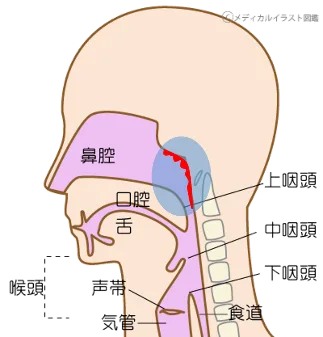
In October, a nasal endoscopy revealed an abnormal growth. A biopsy was subsequently performed, and she was ultimately diagnosed with nasopharyngeal carcinoma.
For Ms. Zhang, a 38-year-old mother of two lively and beloved children, the diagnosis came as a devastating shock.
After beginning chemotherapy in China, Ms. Zhang and her husband hoped to explore more advanced treatment options that might improve the outcome.
They contacted our Yishitong team, and we promptly translated her medical records into Japanese and arranged a consultation with Professor Tetsuo Akimoto at the National Cancer Center Hospital East in Japan.
Professor Akimoto quickly arranged a remote consultation and confirmed that Ms. Zhang was eligible for proton therapy. He provided a preliminary treatment plan and explained the possible side effects in detail.
Faced with the challenges ahead, Ms. Zhang and her husband discussed their options repeatedly. Ultimately, driven by her wish to remain with her children and watch them grow for as long as possible, she decided to travel to Japan for treatment.
Our team promptly provided the required medical guarantor services and assisted Ms. Zhang and her husband in successfully obtaining Visas for Medical Stay. Shortly after completing her third cycle of chemotherapy, Ms. Zhang boarded a flight to Japan accompanied by her husband.

Treatment Process in Japan
Number of irradiation sessions: 33 sessions over approximately seven weeks
Total irradiation dose: 66 GyE, with 2 GyE delivered per session
During the later stage of treatment, the irradiation position was checked several times at the physician’s request to confirm whether treatment could continue according to the original plan.
Although 35 irradiation sessions had initially been scheduled, Professor Akimoto ultimately determined that 33 sessions would be sufficient.
During the later stages of proton therapy, Ms. Zhang experienced skin inflammation, pain when swallowing, loss of appetite, and reduced taste sensation.
The physician prescribed an anti-inflammatory ointment and instructed her to apply it three to four times a day. She was also advised to rinse her nasal passages with saline and to wear a pure cotton scarf when going outside, protecting her neck from friction caused by clothing collars and from ultraviolet exposure.
Her appetite was expected to begin recovering approximately two weeks after the completion of proton therapy. Although her sense of taste might not fully return, it was expected to improve gradually over time.
The physician particularly emphasized that the most important part of her future daily care would be keeping her mouth moist and clean.
Ms. Zhang’s treatment journey in Japan was more than a physical battle against illness. It was a reflection of her courage in facing every challenge for the sake of her children and her family.
Whenever she endured pain, she thought of her children’s smiling faces. Whenever she felt exhausted, she drew strength from her husband’s unwavering companionship and support.
She believed that, as long as she continued moving forward, a brighter tomorrow would eventually come. Ms. Zhang’s courage and resilience deeply touched every member of our team, and her story continues to inspire many others who are fighting serious illnesses.